I shuffle like a leper with bells, a warning to all nearby to keep their distance. I’m laden with glass: two canvas bags full. The bottle bank seems a long way off.
I think my fingers are getting longer.
An elderly couple are walking ahead of me. I could cross to the other side, but I won’t. The sun’s here, a balm for my afflictions. No matter, I’ll not catch them. But I will get close enough to make them turn.
I smile as I squint, and sniff for good measure (the weather’s quite cold). They hurry. I’m happy to note I can still make people’s hearts race. Tinkle tinkle.
My load’s soon upended and I’m all the lighter for it. All the warmer too; I unzip my coat as I stash the bags in my rucksack. I’m a butterfly come from a chrysalis, and just as moist. I make way past some south-side allotments on my way to the next bank, this of the cash-dispensing kind. Once upon a time, in city just like this, there used to be ATMs in every nook and cranny. Cash-loving, card-fearing Germans would queue to refill their purses, the soft paper plap of the notes being sorted as comforting a sound as skat cards being dealt.
No more. Now they’ve all been recalled — the banks too — so plebs like me have to cross half the city for a fiver. When I arrive, there’s a queue for the machine outside. I go in. There are queues inside too. I stand in the one for the nearest machine, behind a guy in a hoody with a hunch. He takes his time. I look at his shoes. One of the laces is untied. Hoody, slow, sloppy. Criminal. I keep my eye on him. He eventually slopes off with a huff and heads outside. My turn. Now I have a hunch: this machine’s on the fritz. Twice it gives me my card back saying it’s having trouble processing things.
“What kinds of things?” I ask it, pressing some buttons.
“All,” it replies, giving me my card back again.
I’m disinclined to offer counselling to a cashpoint, so I take my plastic to the next (now free) machine. It works. As I type in my PIN, I hear a voice behind me.
“So?”
I check the shiny glass they stick on ATMs so you can see who’s about to mug you. It’s the hoody guy.
“Is it working?” he adds.
“It is,” I say. “The only one, it seems.”
He laughs and doesn’t rob me. Wishes me a nice day, in fact. Gotta love the Leipzig criminals.
I cross the road to Südbrause, the best Indian in the city before someone set fire to the top floor. The signs outside read “Closed until further notice” and “Watch your head”. There’s a pile of broken roof tiles by the second. I head around the back and join Kochstraße, heading north. This isn’t the quickest way to where I need to go (DM(*)), but I’ve a hankering to walk this road. Beneath its tar and cobbles are centuries of history. It lays atop the ancient Via Imperii, a trade road that ran from Rome to Stettin (so Italy to the Baltic sea). Frequented by horses, carts, knights, squires, and pilgrims, this was the north-south super highway of the Holy Roman Empire. So many feet, so many metres down.
I imagine the kinds of trades that were plied here centuries ago. Were there shops along this street? Inns? A smithy, perhaps? I pass a couple of scaffolders loading their lorry with boards, one with a beard down to his chest, the other smooth as a polished stone (and just as round). I keep my distance — there have been rumours of a plague passing through Europe, and I think I spot a bubo or two.
When I get near to the tailors, I see a pile of pink debris on the floor. It’s a smashed doll, fragments of head and legs scattered over the stone. Two long metal rods protrude from a skirt, bereft of limbs. Dropped by a child fleeing guards? What happened to that family?
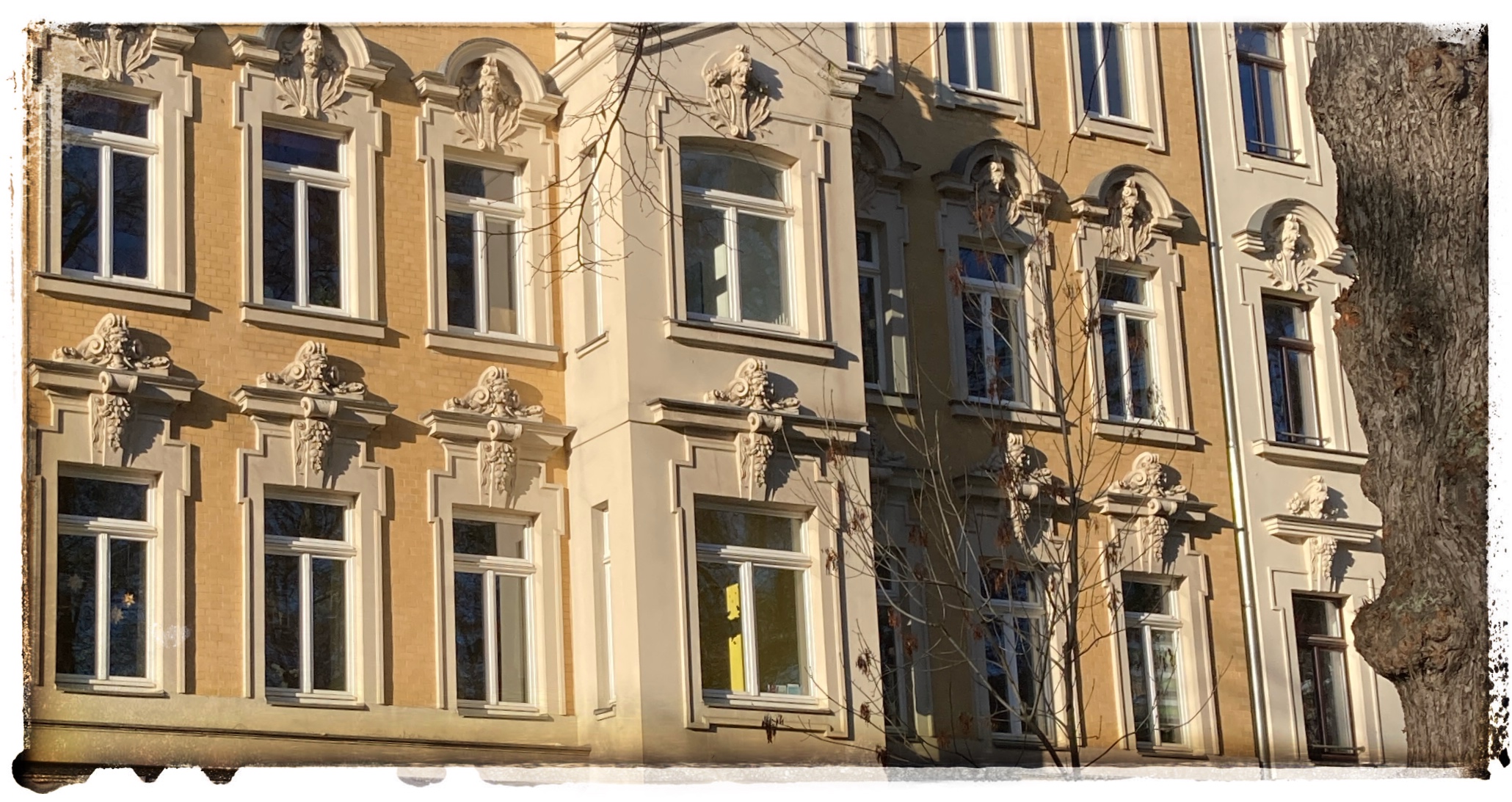
I pass a jewellers, an off-licence, a hairdresser’s, a Späti(**). I pass buildings with sculptures of bearded heads above the windows, below which tumble fruits. Likenesses of Bacchus perhaps? (Filthy pagan remnants of a bygone age. What would the pope say if he travelled here?)
I find what seems to be a shed beneath graffiti. (Though it might have been a public toilet once — hard to tell.) It sits to the side of a park, which sits to the front of a school. A toll booth for travellers heading south. Or a shrine for the pious to pray at. To St Nicholas, maybe — patron of merchants (among many, many others).
On through the slipstream of time I wander, dreaming of the bygones, till I reach the top of Koch and enter Karl-Liebknecht. The Via Imperii continues north, but I’ve travelled as far as I can. The apothecary’s east of here. I bid my farewells.
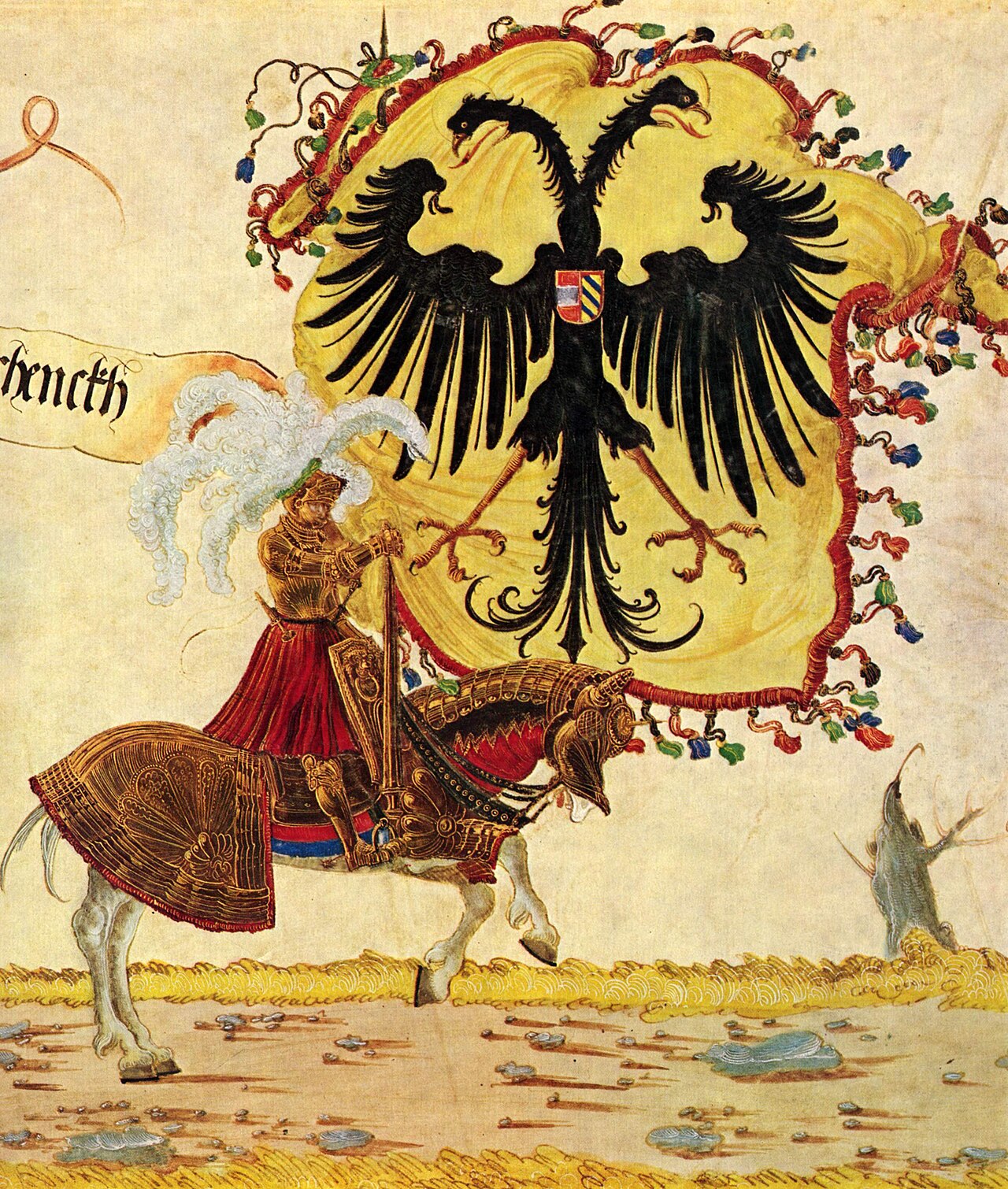
As I cover the last few kilometres, I listen to the crows and starlings, active in the gardens. How many of their forebears were foraging here when Maximilian I was Holy Roman Emperor?
—
(*) DM, the Drogerie Markt. I wrote about it here.
(**) A (usually East German) convenience store that stays open late, i.e. spät, hence Späti.